How It Works?
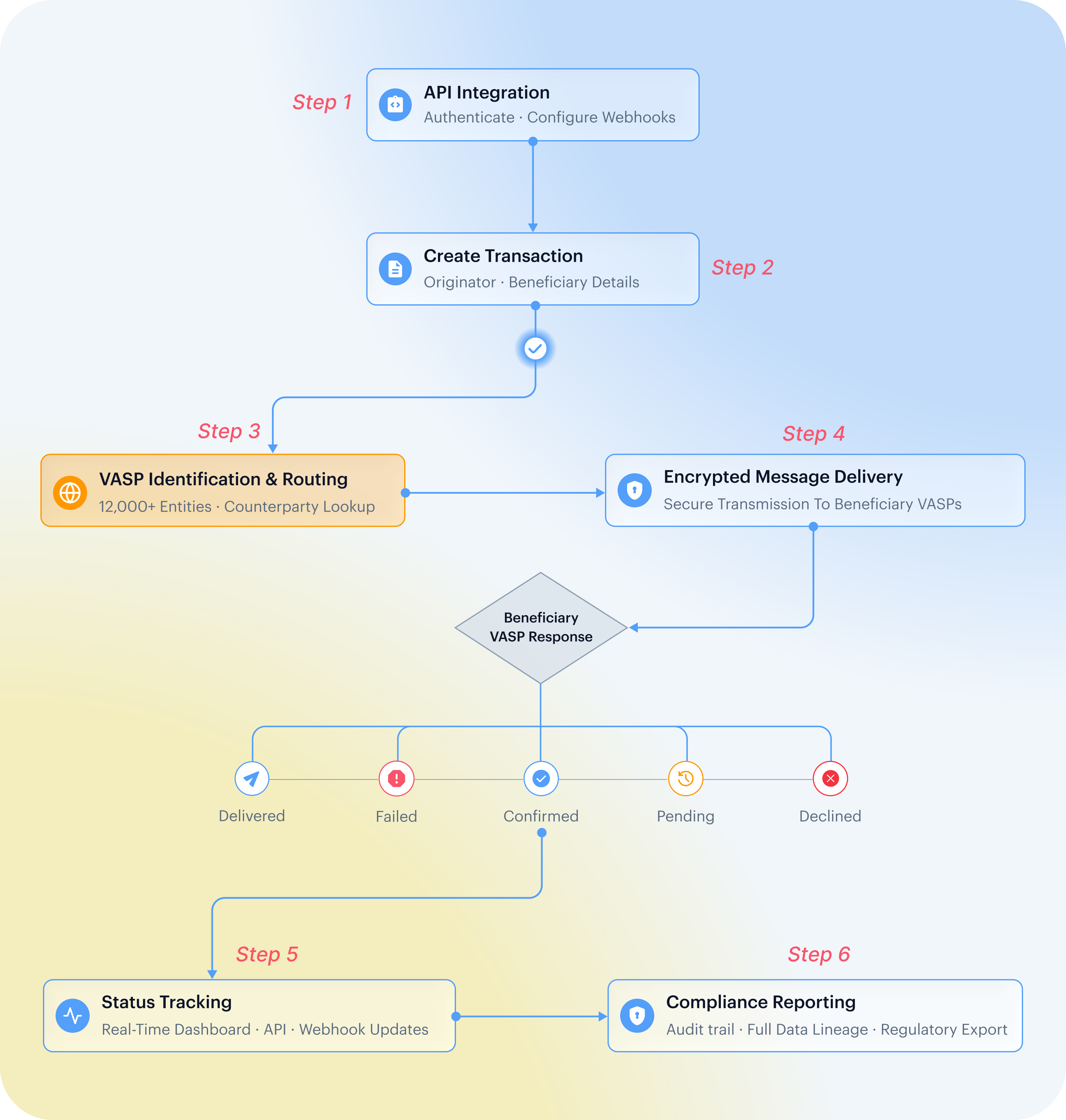
The Shufti Travel Rule solution follows a straightforward flow to ensure compliance with global regulatory requirements for crypto asset transfers.
Step 1: Integration
Integrate the Travel Rule API into your crypto platform using the RESTful endpoints. The JSON-based data model makes implementation straightforward. Authenticate with Basic Auth using your client_id and secret_key (or an Access Token) — the same credentials used by every other Shufti service. See Get Started - Authentication.
Step 2: Transaction Creation
When a customer initiates a crypto transfer, create a Travel Rule transaction with all required originator and beneficiary information through the API. Specify the direction (OUTGOING or INCOMING), asset, amount, blockchain details, and party information.
Step 3: Automatic Message Delivery
The system automatically identifies the counterparty VASP from the network of 2000+ identified VASPs and securely transmits the Travel Rule data. Message routing, delivery confirmation, and retry logic are handled automatically.
Step 4: Status Tracking
Track a transaction's status in two ways:
- Callbacks — the final outcome is pushed to your
callback_urlas a signedverification.accepted/verification.declinedcallback. See Responses › Callbacks. - On-demand — query the Read / Detail endpoints at any time.
The Shufti verification stays pending until the transaction reaches a terminal status:
| Transaction status | Verification outcome |
|---|---|
CONFIRMED | accepted |
DELIVERED on an OUTGOING transaction | accepted |
DECLINED / FAILED / CANCELLED | declined |
PENDING, or DELIVERED on an INCOMING transaction | stays pending |
For INCOMING transactions, you can also update the status to CONFIRMED or DECLINED based on your compliance review.
Step 5: Compliance Reporting
Access complete audit trails and reporting for regulatory compliance. All Travel Rule transactions are securely stored and available for review. Use the Read Transactions endpoint with date range and status filters to generate compliance reports.