How it works
1:1 authentication is a biometric identity verification process in which a person’s face is compared against a single, pre-enrolled reference record associated with a unique identifier. The purpose of this method is to confirm that the person attempting authentication is genuinely the same individual who was previously onboarded.
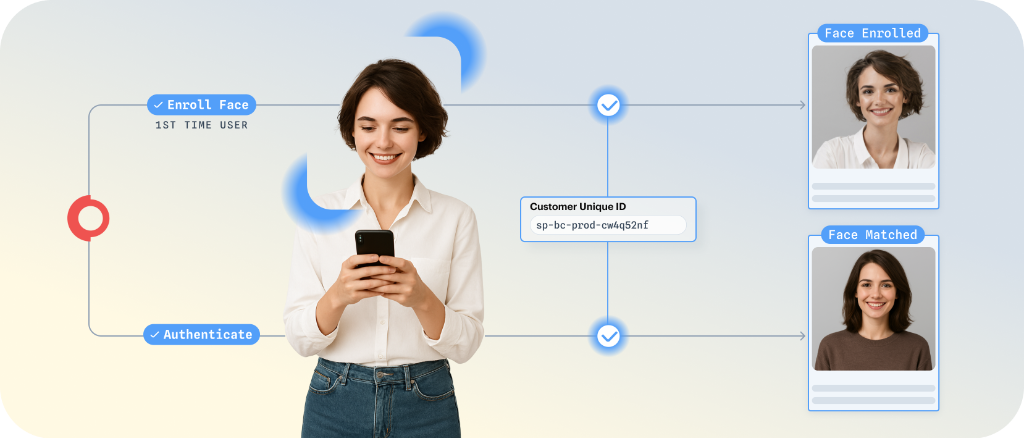
Step 1: User Enrollment
The 1:1 authentication process begins with a user securely enrolling their facial data. During this stage:
- The user captures a selfie or facial image using a trusted device.
- The system performs quality checks to ensure the image meets required standards (lighting, clarity, face position, and liveness).
- Advanced facial recognition algorithms extract biometric features from the image and convert them into a secure facial template and associate them against a unique customer identifier.
- The facial template and the unique identifier are securely stored together as a reference record.
Step 2: User Authentication
When the user later attempts to authenticate:
- The request is initiated by passing the customer identifier of the user.
- The end user journey begins with a live facial image capture.
- Liveness detection mechanisms are applied to ensure the presence of a real person and prevent spoofing attempts using photos, videos, or masks.
- The live facial template is matched directly against the enrolled facial template.
- If the Liveness checks is passed and the facial image matches with the stored template the user is authenticated successfully.
Key Benefits of 1:1 Authentication
- High Accuracy: Direct matching against a single reference reduces false positives and false negatives.
- Faster Performance: No database-wide searches, enabling near-instant verification.
- User-Friendly Experience: Simple selfie-based authentication without passwords or physical documents.